Let us begin with the ultimate 2026 industry bluff: the 26-stop dynamic range sensor. It is the shiny new toy that corporate honchos are using to dazzle the masses at trade shows, but there is a physical tax on that "miracle" that they won't put on the billboard. To achieve 26 stops of dynamic range, you aren't getting a 100-megapixel masterpiece; you are getting a 2-megapixel frame. Physics is a zero-sum game. You can have "infinite" shadow recovery, or you can have high resolution, but you cannot have both in a body that won't melt in your hands. This is the starting line of the modern camera industry: a world where "innovation" means selling a safety net for the incompetent while pretending it’s a revolution for the artist.
The industry is currently obsessed with "forgiveness"—the ability to make a catastrophic exposure mistake and "save" it in post-production. This has birthed a generation of photographers who know every nuance of sensor latitude but couldn't shape a shadow with a lamp if their life depended on it. We are being sold the ability to be bad at our craft. While the "Spec-Bros" scream about 150 megapixels, the irony is that 99% of these images are destined for A4 size mags or newsprint half spreads/ social media promos that violently crush them down to 2 megapixels. We are paying for 150 million pixels of "potential" only to consume 2 million pixels of "reality." Apple has confirmed that their phones are good enough for billboards.
The most egregious lie in this industrial complex remains the "Equivalent Focal Length" hoax. It is optical gaslighting. When a manufacturer tells you that a 200mm lens on an MFT body "is like" a 400mm on Full Frame, they are lying. A 200mm lens has a specific physical magnification and background compression tethered to the glass, not the sensor. Putting a smaller sensor behind it is exactly like taking a pair of scissors to a medium-format negative. You aren't getting more "zoom"; you are simply throwing away the edges of the frame. The industry sells this as "reach" to hide the fact that they are charging you thousands of dollars for a smaller image circle, banking on the hope that you won't notice you’ve lost the light-gathering area and the shallow depth-of-field that a larger sensor provides.
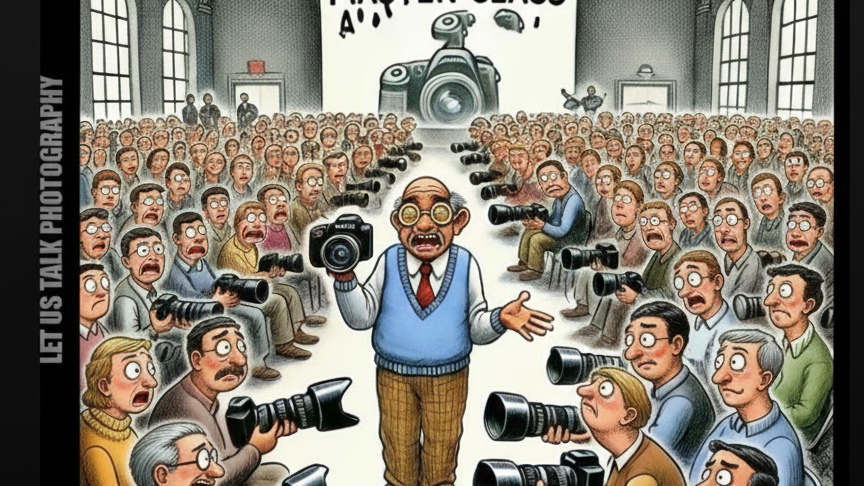
This obsession with gear-as-status was perfectly illustrated at a recent photography conclave. Two photographers stood in the hall: one held a Hasselblad X1D II, a $6,000 totem of luxury, while the other held a "humbler" small-sensor camera. The crowd swarmed the Hasselblad, not to see the images it produced, but to bask in the proximity of the price tag. They ignored the other photographer, whose "wasteful" 20MP files likely held more soul and skill than the entire room combined. It was not a trade fair; it was supposed to be a discussion of vision supported by pictures. Yet, the crowd chose to worship the vessel rather than the work. They were looking for a shortcut to talent that you can buy with a credit card.
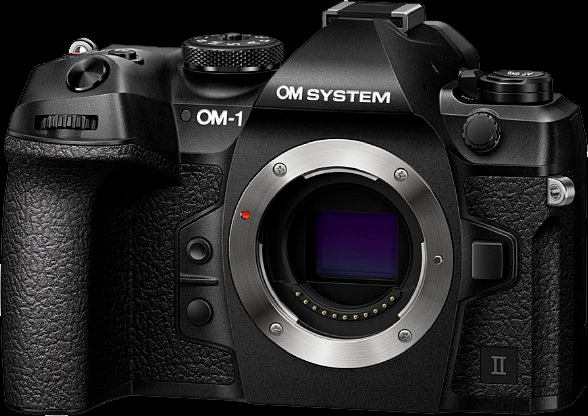
So, why do they still make MFT and APS-C? They make them because, for the thinking photographer, smaller is often smarter. While the masses are busy buying 26 stops of DR to fix their mistakes, the specialist is exploiting the physical advantages of a smaller slab of silicon. Because an MFT sensor has roughly 25% of the mass of a Full Frame sensor, it can be manipulated with surgical precision. This allows for 8.5 stops of stabilization—a feat that physics makes impossible for a heavy, lumbering Full Frame sensor. It allows for readout speeds that eliminate rolling shutter, turning the camera into a high-speed scalpel that can fire at 120 frames per second without overheating.
The "viewing distance fiasco" is the industry’s next best-kept secret. In a gallery, the human eye cannot distinguish between a 20MP image and a 100MP image from a standard viewing distance. But the "honchos" don't care about galleries; they care about the status of the spec sheet. They want you to feel that a 20MP sensor is a "waste," even though that same tool can be dropped in a swamp and still capture a bird in flight with more precision than any bloated Full Frame equivalent.
The smiling MFT shooter has opted out of this fraudulent arms race. They aren't shooting for the "potential" of a file that might come to "save" them later; they are shooting for the shot they are getting right now.
I feel that the battle is over. The dead are already stacked for a mass burial. The industry has successfully replaced the artist's eye with the consumer's wallet, and the crowd has chosen the totem over the truth. The battle is really over. Trust them to tell you--" You are A Big Nothing".