The First Aid of the Eye: An Elegy for the No-Choice Frame
We are a generation operating in a state of deep, collective anaesthesia. We have been conditioned to believe that our choices—our frantic adjustments of customizable buttons, our loyalty to specific sensor sizes, our endless menu to menu-diving—are conscious, artistic declarations. They are not. They are the symptoms of a profound psychological submission. We hide behind the physical complexity of our machinery because we no longer trust our eyes to look at a raw, unmediated reality. We treat our technology as an ideological fortress, a physical buffer between our trembling creative consciousness and the terrifying emptiness of the present moment.
The modern industry has capitalized on this insecurity by selling us the ultimate lie: that infinite flexibility equals creative liberation. We are handed pristine, clinically sterile vessels that resolve everything and mean absolutely nothing. We capture files that hold an infinity of data, only to sit in front of monitors hours later, toggling a keystroke between colour and monochrome. This is the tyranny of the post-exposure choice. When an image can be anything after the fact, it becomes nothing in the moment of its birth.
We have surrendered the ancient, liberating discipline of No Choice—the holy state where a fixed medium demanded that the brain adapt its vision to a singular set of constraints before the shutter ever clicked. When you have no choice, it brings out the best in you. The brain stops calculating alternatives and starts observing reality. By delaying the decision of what the photograph should be, we have shifted photography from an act of present-moment observation to an act of retrospective indecision. We are exhausting our cognitive currency on the mechanics of the machine, leaving our minds starved of the raw energy required to actually see.
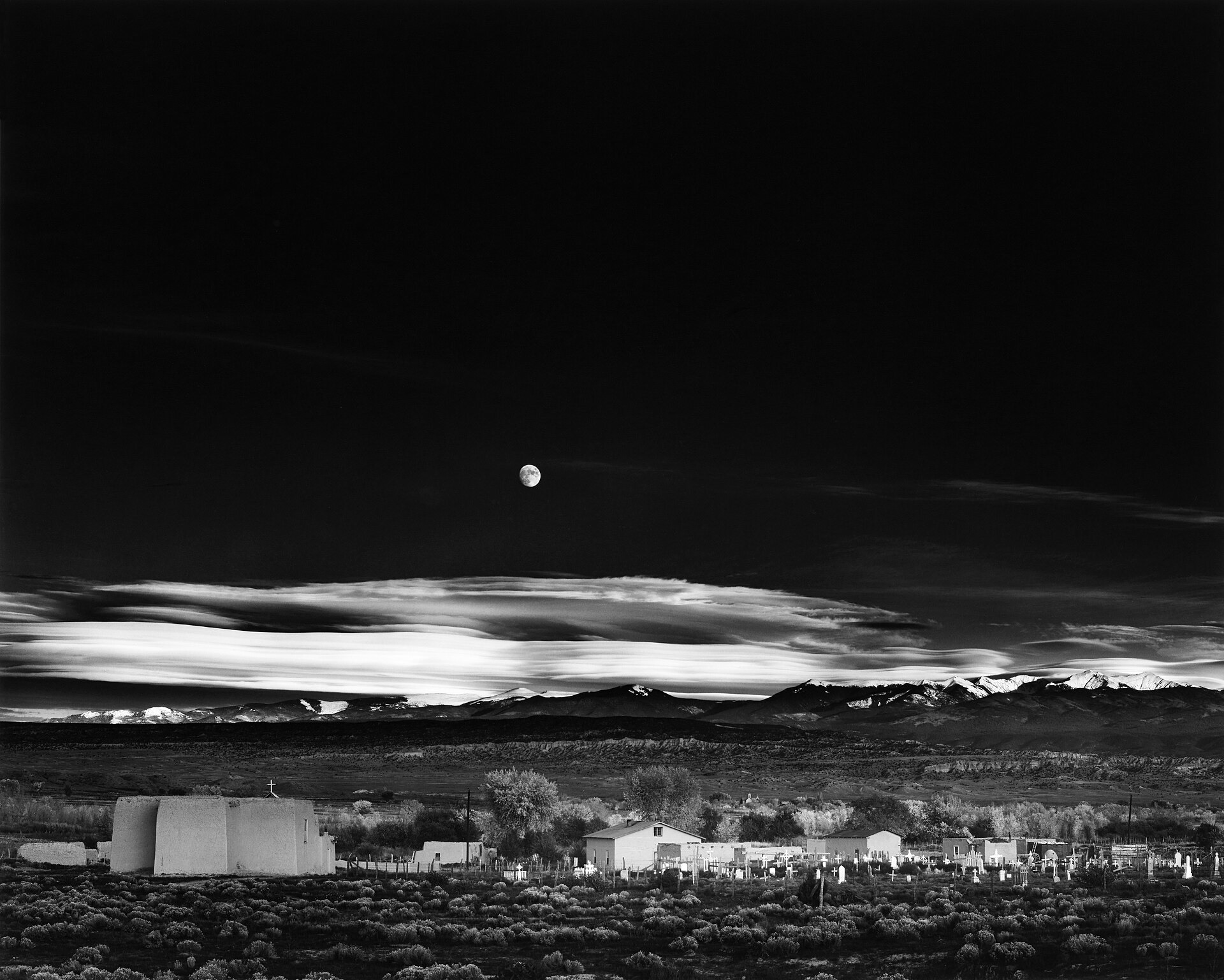
Ansel Adams' Moonrise: A masterpiece born from the desperate urgency of a no-choice snapshot..
The ultimate indictment of our age is our obsession with optimization. We have reached a point of such profound hubris that we allow algorithms and neural networks to "correct" historical snapshots—including Ansel Adams’ frantic moonrise over Hernandez. We feed his negatives into software that alters, cleans, and upscales them into a hyper-real, pixel-perfect fantasy that Adams himself could have never seen, nor ever intended. It is an act of artistic desecration sold as art par excellence. We are rewriting history to fit our current sickness: a deep-seated intolerance for the flawed, the human, and the urgent.
We forget that Adams succeeded in that desert highway because he was cornered by circumstance. He had no light meter, the sun was dropping, and the light was dying. He had no choice but to trip the shutter on instinct alone. The artistry we worship on a gallery wall years later was just the dressing on the wound. The picture itself was saved by first aid.
Yet, we continue to run from this presence. Have we ever actually heard ourselves when we shatter our shutters at two hundred frames per second? That mechanical or electronic scream isn't the sound of creation; it is the sound of a panic attack. It is a machine gun firing into the dark, hoping that mathematics will catch what our awareness missed. Spraying frames is the ultimate submission—a confession that we do not know what matters, so we will collect everything and let a computer help us sort through the landfill later.
In our panic to justify this existential vacuum, our damaged cerebral tissues have institutionalized the medium. We have constructed a high-art vocabulary to embalm our work, carving it into sanitized categories: "Classic," "Suspended Art," "Posthumous Poems." We look down on the humble snapshot as something pedestrian, an accidental byproduct of the untrained eye.
But the snapshot is the only real picture left.
The snapshot is the urgent, chaotic first aid applied to a bleeding moment. It does not wait for the surgeon to arrive with his final aesthetic tuck-ins, his software updates, or his clean margins. It offers no hiding place behind the glamour of specifications or the safety of a non-destructive RAW conversion. It is a lightning-fast collision between an external event and an internal reflex. To save the patient—to capture the breathing, fleeting truth of an existence that will never happen exactly this way again—we must learn to put down the scalpel, silence the high-speed drive, and have the courage to trust the eye before the world bleeds out.
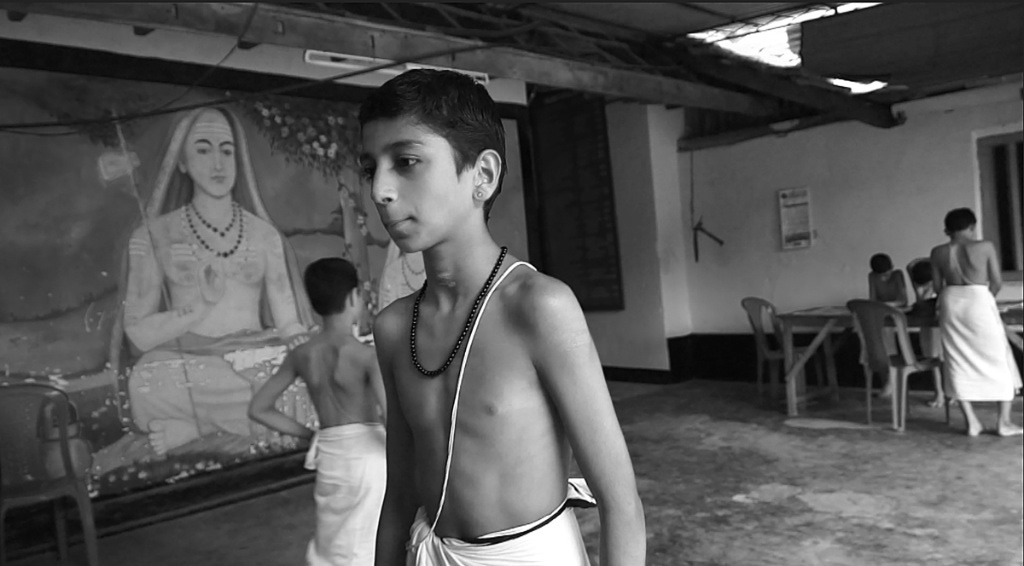
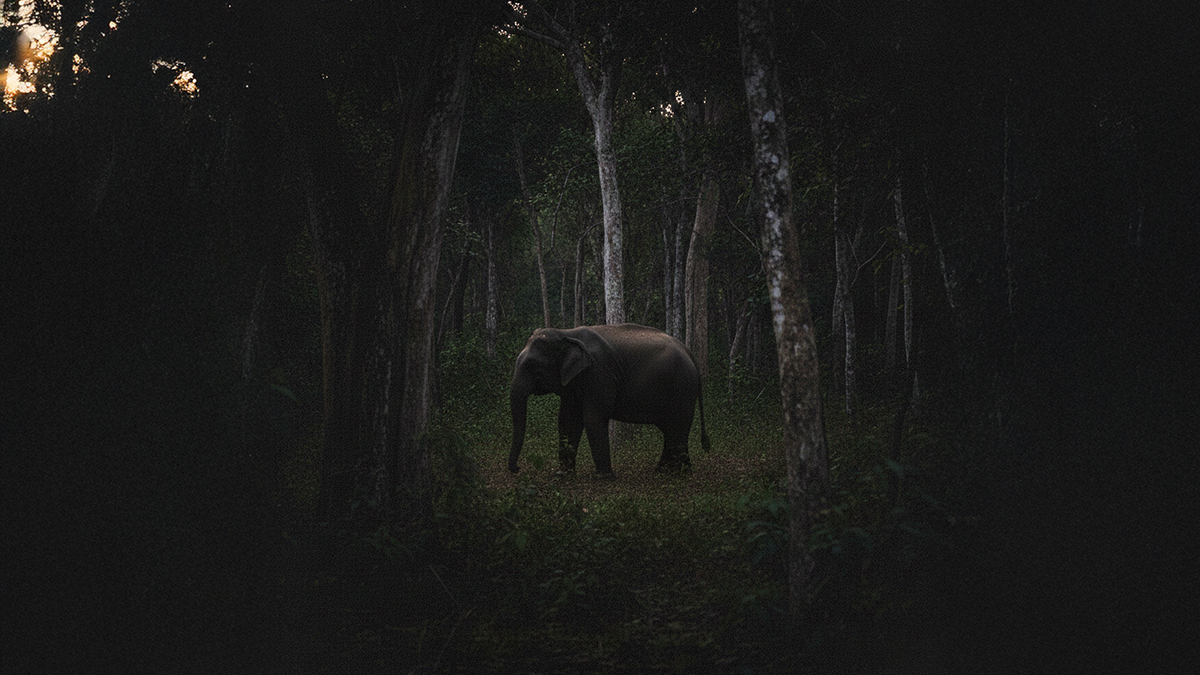
The eye present, the world unbothered..