The idea that a full-frame 100 mm lens somehow “becomes” a 150 mm lens when mounted on an APS-C camera is one of the more successful myths modern photographic marketing has managed to pass off as common sense. Successful not because it is correct, but because it is convenient, repeatable, and sounds reassuringly technical to those who have never had to think beyond a single film format.
Nothing is actually changing. No glass moves. No focal length stretches itself in polite obedience to sensor size. The lens does not wake up one morning and decide to behave differently because the silicon behind it has shrunk. What changes—quietly, unglamorously, and without any optical drama—is simply the area of the projected image that is recorded. That is all.
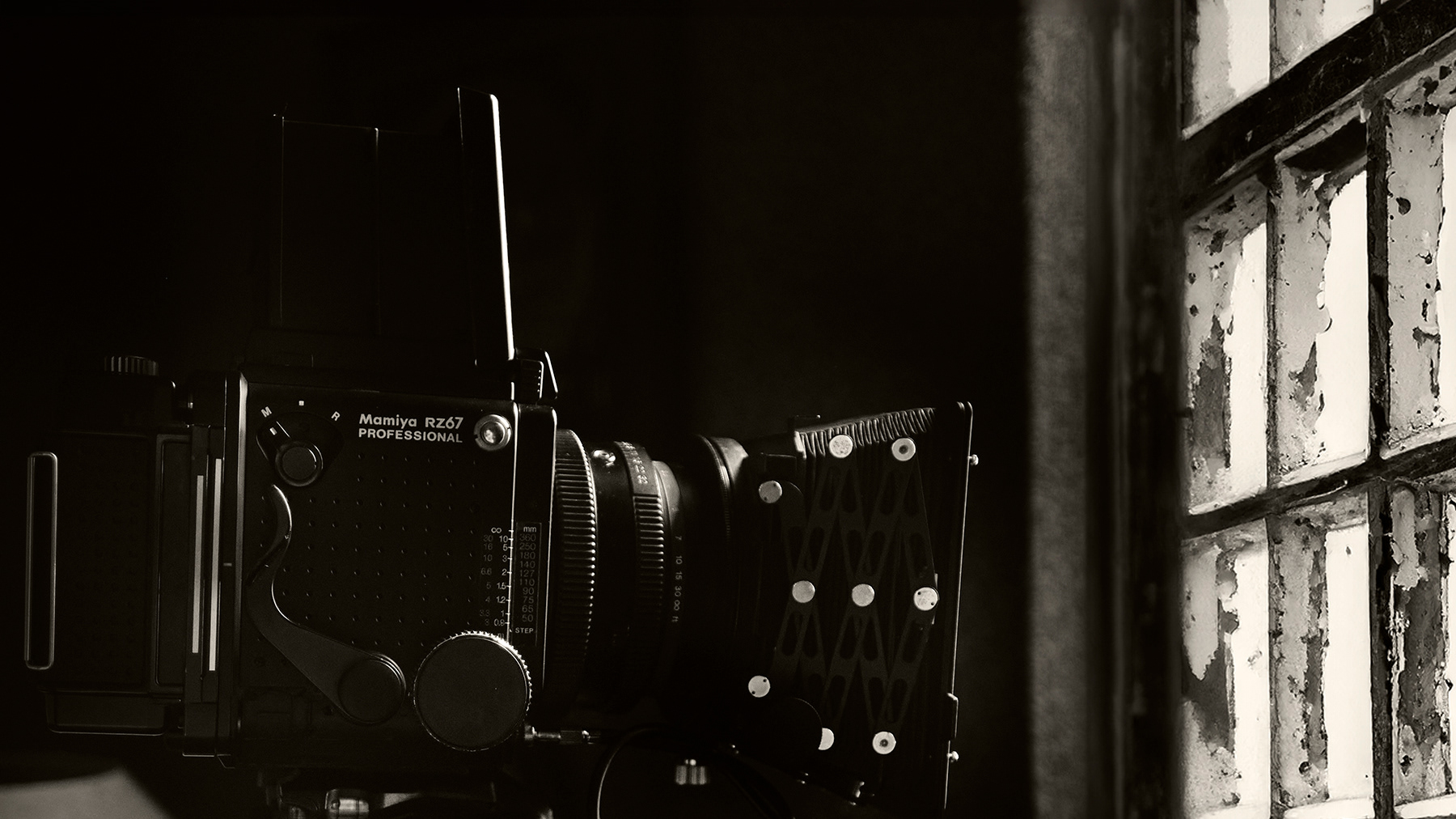
This was never confusing in the era of medium format. A Mamiya RZ with a 110 mm lens did not “turn into” a telephoto monster when you swapped a 6×7 back for a 6×6 or 6×4.5 back. The same lens projected the same image with the same perspective and spatial relationships. You merely cropped into it. Even the 35 mm panoramic backs, which masked the frame top and bottom while retaining the horizontal length, were understood instinctively: same lens, same optics, different slice of the image. No one felt the need to invent a fictional focal length to soothe themselves.
Yet, somewhere along the digital transition, this clarity was sacrificed at the altar of accessibility. The industry decided that photographers could not possibly cope with the notion of crop, so it offered them equivalence instead—an ingenious linguistic device that converted a simple framing difference into a magical act of multiplication. Thus was born the phrase “behaves like,” a phrase that carefully avoids saying what is actually happening while sounding authoritative enough to discourage further questioning.
The damage was subtle but profound. A generation of photographers grew up believing that smaller sensors somehow magnify lenses, as if APS-C cameras contained invisible teleconverters granted by benevolent engineers. Perspective became confused with reach, cropping was mistaken for optical change, and the fundamental truth—that perspective is governed by camera position, not sensor size—was quietly buried under equivalency charts.
In reality, adapting a full-frame lens to APS-C or MFT today is conceptually no different from fitting a different film back to a medium-format camera decades ago. The lens does not zoom. The image does not compress. The world in front of the camera does not rearrange itself. You are simply recording less of what the lens has always projected. Calling this a 1.5× transformation is not education; it is a mnemonic that overstayed its welcome and began masquerading as physics.
Marketing did not exactly lie—it merely simplified until the simplification became the story. Unfortunately, once a shortcut is repeated often enough, it ceases to be a tool and becomes dogma. And so we find ourselves in the curious position where a photographer must now argue, in 2025, that cropping is cropping, that focal length is focal length, and that a lens does not change its nature just because the rectangle behind it does.
Medium-format , Large format film photographers never needed this explanation. They already knew.
When Olympus introduced the half-frame PEN cameras, no one paused to wonder whether their 28 mm lens was secretly a 14 mm masquerading as something else. It was simply a 28 mm lens, projecting a 28 mm image with all the optical relationships that definition implies, recorded on a smaller piece of film. The frame was reduced, not the physics. Perspective did not shift, space did not compress, and light did not renegotiate its wavelength to accommodate a new narrative. The optics were merely miniaturised with intent and precision, not compromised or reinterpreted. Photographers understood this instinctively, just as they understood interchangeable film backs and masked panoramic frames: the lens remained constant while the format changed. No equivalence was invented because none was required. What was once self-evident has since been reframed as a transformation, as though modern sensors possess the power to alter focal length by association. Yet the same truth remains visible today in both the hulking 35 mm behemoths and the slender pancakes that coexist in current systems. Mounted on any format, they behave exactly as they should, because lenses have never cared what records them. Formats come and go, language drifts, marketing adapts—but optically, then as now, nothing moved.