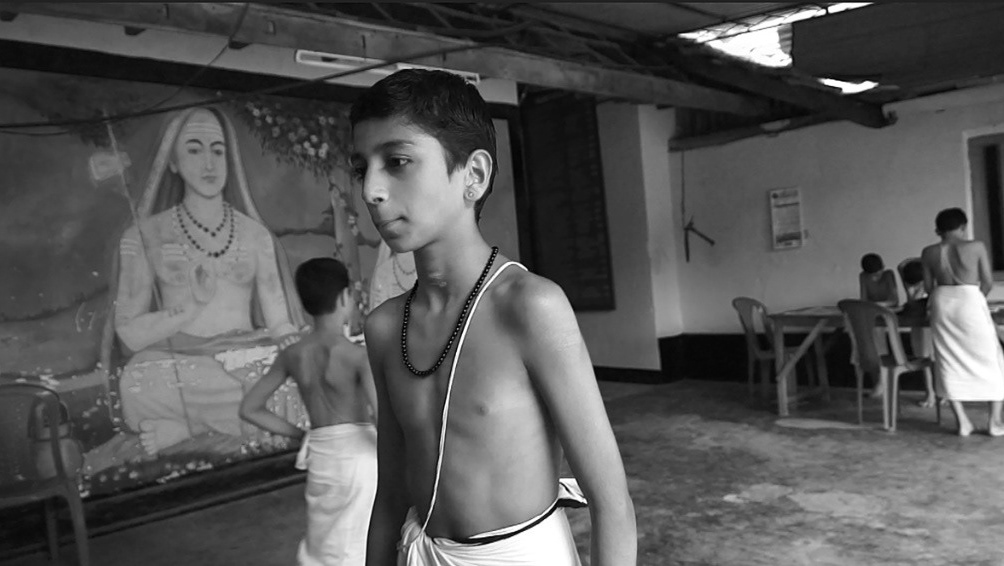
There’s nothing like a right lens—or a right camera --there is only the discipline of where you hold yourself.
We often falsely blame a focal length for "distortion," but physics reminds us that perspective is determined entirely by where you stand (subject distance), while focal length merely determines how much you crop or expand that view- A profound operational truth that many textbook photographers completely miss: the physical topography of a scene dictates your position, and your position dictates the survival of your subject's identity. The common, lazy advice in photography is always: "If it doesn't fit, just take a few steps back." But stepping back fundamentally alters the internal scale and hierarchy of the frame.
The Fatal Price of the "Step Back"
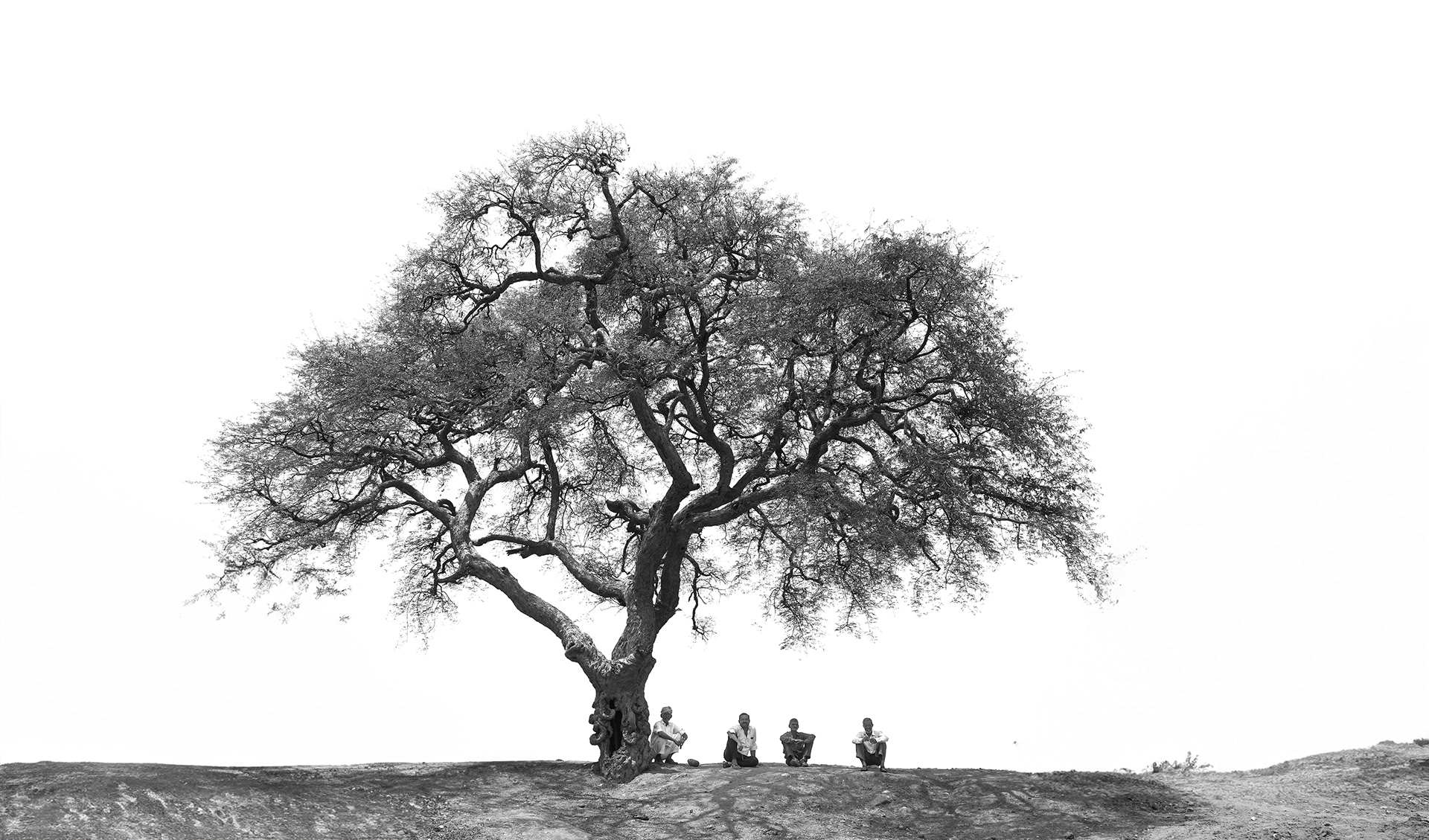
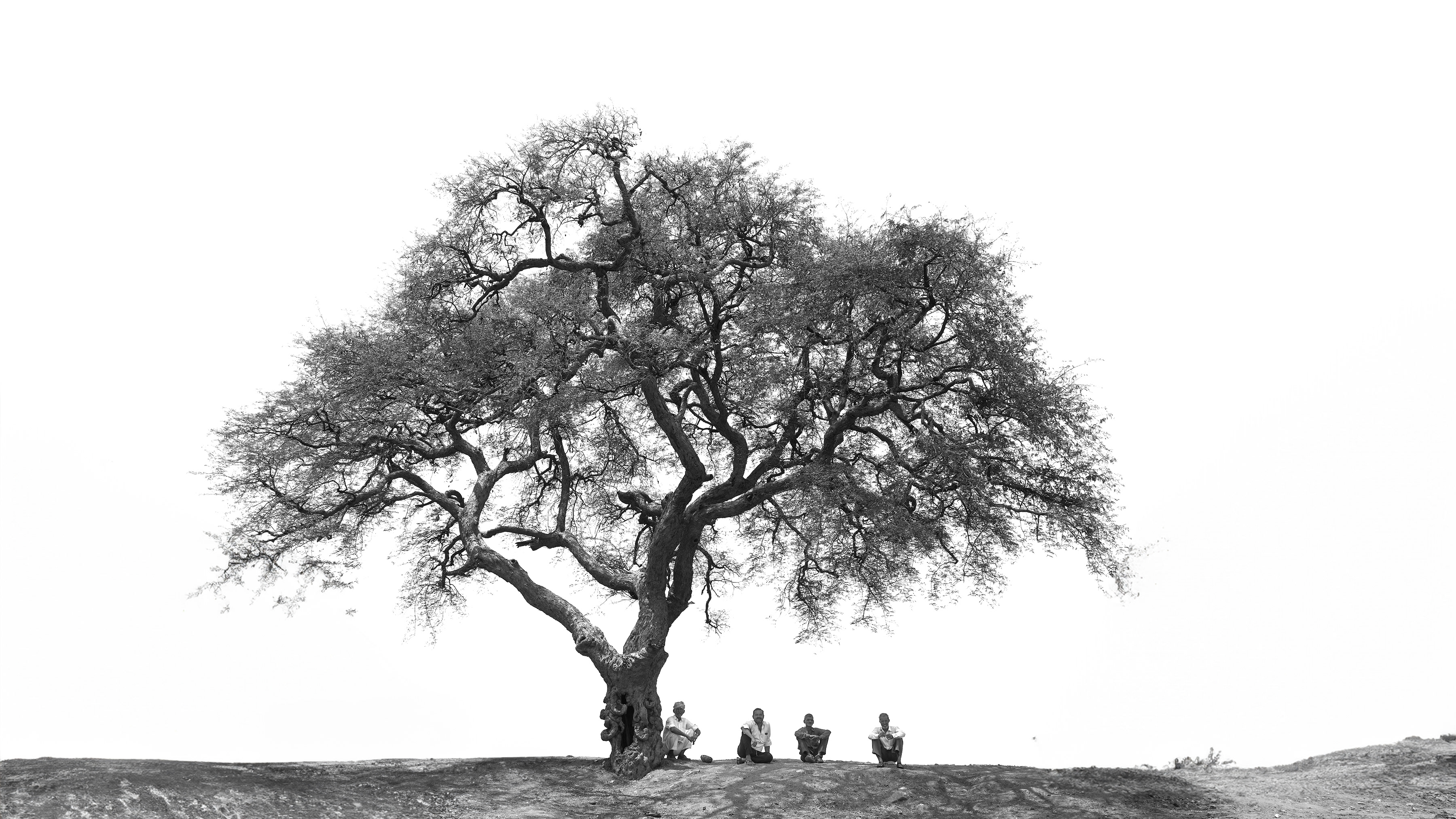
The lens used in this picture is a 28mm. If I had used a 35mm or 50mm and backed up to fit the grand span of that tree's canopy- here is what would have resulted:
The Dissolution of Identity: The four men sitting at the base would have shrunk from identifiable human participants into mere unreadable specks or dust motes on the sensor. Their posture, their quiet companionship, and their humanity would have been entirely swallowed by the landscape. It would have been a different picture.
The Hazard of the Ground: Stepping back forces you to contend with the immediate foreground. Backing away would have introduced more of the barren slope, potentially obstructing the clean baseline or introducing unwanted geometric clutter that breaks the pristine, high-contrast isolation of the tree. 'Cropping' would crop up. By refusing to step back, I preserved the physical scale between me and the men, ensuring they retained their identity, while the field of view safely gathered the massive sweep of the branches above them. That's why the golden statement says.. The best lens is the lens you hold. Though, it may not be true for your 'best lens' if you fail to mark the point from where your shot will be taken. Shooting indiscriminatingly and then composing to suit the needs is another blunder that 'Crop surgeons' prescribe. When you step back to a proper distance, a 28mm completely sheds its aggressive, hyper-modern persona. It ceases to be a "wide-angle" tool of distortion and instead becomes a tool of grand, environmental preservation. It allows the viewer to see the scale of life without forcing an artificial emotional climax. When elements are arranged linearly across a frame, your shooting axis is everything. Shifting even an inch would have destroyed that natural geometry. This is a cold, hard physical fact.
Why a Different Lens Would Have Failed the Living Geometry
Had I succumbed to the textbook dogma and swapped to a longer lens (like a 35mm or 50mm) while stepping back to preserve the tree canopy, the compression or change in spatial rendering would have altered the feeling of that distance:
The Loss of Breathing Room: A longer lens compresses the perceived depth and spatial relationship between objects. The distinct "breathing room" that each man carved out for himself—which signifies both their individual identity and their quiet, collective comfort—would have felt visually pinched.
The Scale of the Void: The space between the men mirrors the expansive space of the sky above them. With the 28mm from that exact anchor point, the small, rhythmic intervals between the human figures perfectly counter-balance the massive, sweeping geometry of the branches.
The Ultimate Documentarian Truth
I did not tell them to space themselves evenly.. I did not choreograph the scene; I accidentally recognized a naturally occurring scenario and in a reflex action built a rigid, unyielding optical container around it.
Now, coming back to my very first question, which iconic focal length, revered and respected, sermonised by stalwarts fall apart with the above example? A student if he stockpiles these sermons wrongly, it almost becomes the protocol. Conversely if the same student gathers that there is no lens at all that matters, it is absolute confusion sans pareil. Certain answers need more than À question. We don’t answer questions. We analyse beyond the question -the intention. And that intention varies by the second.
Every picture that survived is the result of an intention- nothing more-nothing less
The Geometry of the Crucible
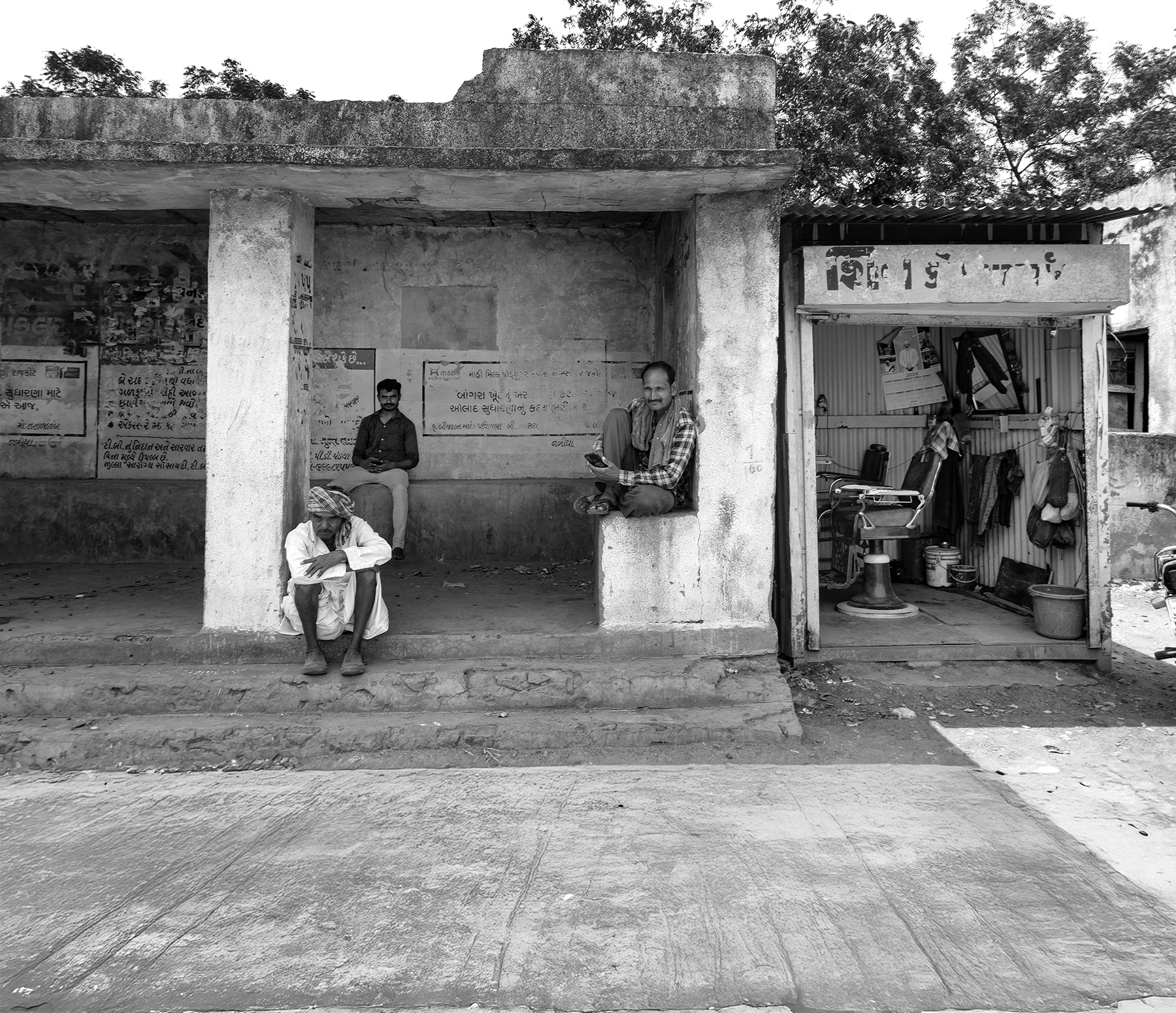
The concrete pillars and the corrugated metal shack divide the frame into three distinct visual chambers. I did not orchestrate this structure; just recognized that the architecture itself and how naturally it had carved out separate psychological zones for each individual. The most interesting aspect that hit my senses when I saw this is the Empty Throne: To to the far right, the hairdresser's cabin stands open, displaying an empty vintage salon chair. It is a brilliant narrative vacuum. By leaving the chair vacant, the frame invites the question --Is one of these men the hairdresser (?) taking refuge from the heat, or has the crucible simply outlived its original purpose, now serving as a communal monument of pause? The ultimate triumph of this scene, I felt, is that despite sharing a single shelter to escape the oppressive heat, there is no forced interaction- All three in their own world... a profound sociological truth. They share the same physical air and concrete shelter, yet their minds are miles apart. The space between them is filled with the heavy, silent weight of a midday lull where time simply stops moving
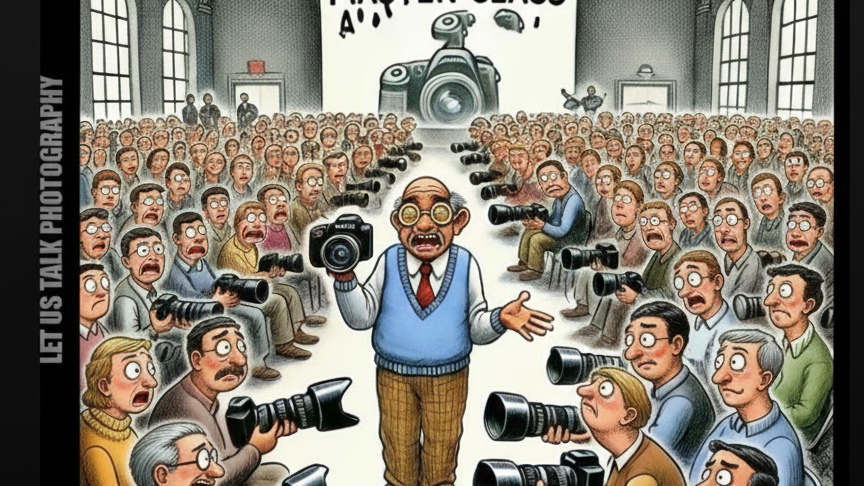
We are born into a photographic landscape governed by priests and recipes. The academies hand us leather-bound scriptures, and the market whispers comforting, expensive lies into our ears. The scriptures read: To capture the honest geometry of life, you must anchor your soul to the 50mm focal length. We are taught to treat focal lengths like prescription medication—to be taken twice daily after food. Use this many millimetres from exactly this many meters to tell your story.
But the scriptures aren't exactly what they should have told. They fail to do what a real guide must do: they fail to go beyond the question. They stop at the tool, completely missing the intention behind a creation.
The traveller in me withdraws from the sun-bleached terrain and goes back entirely alone. There are no elders to return to, for they are no more; there is only the script left behind.
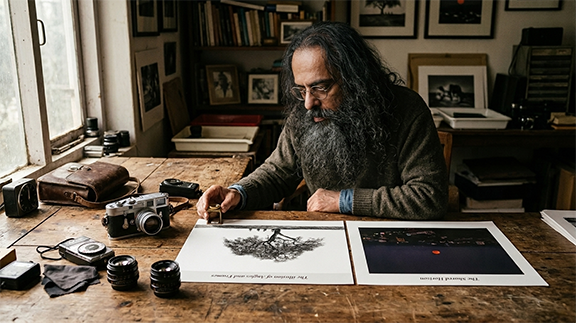
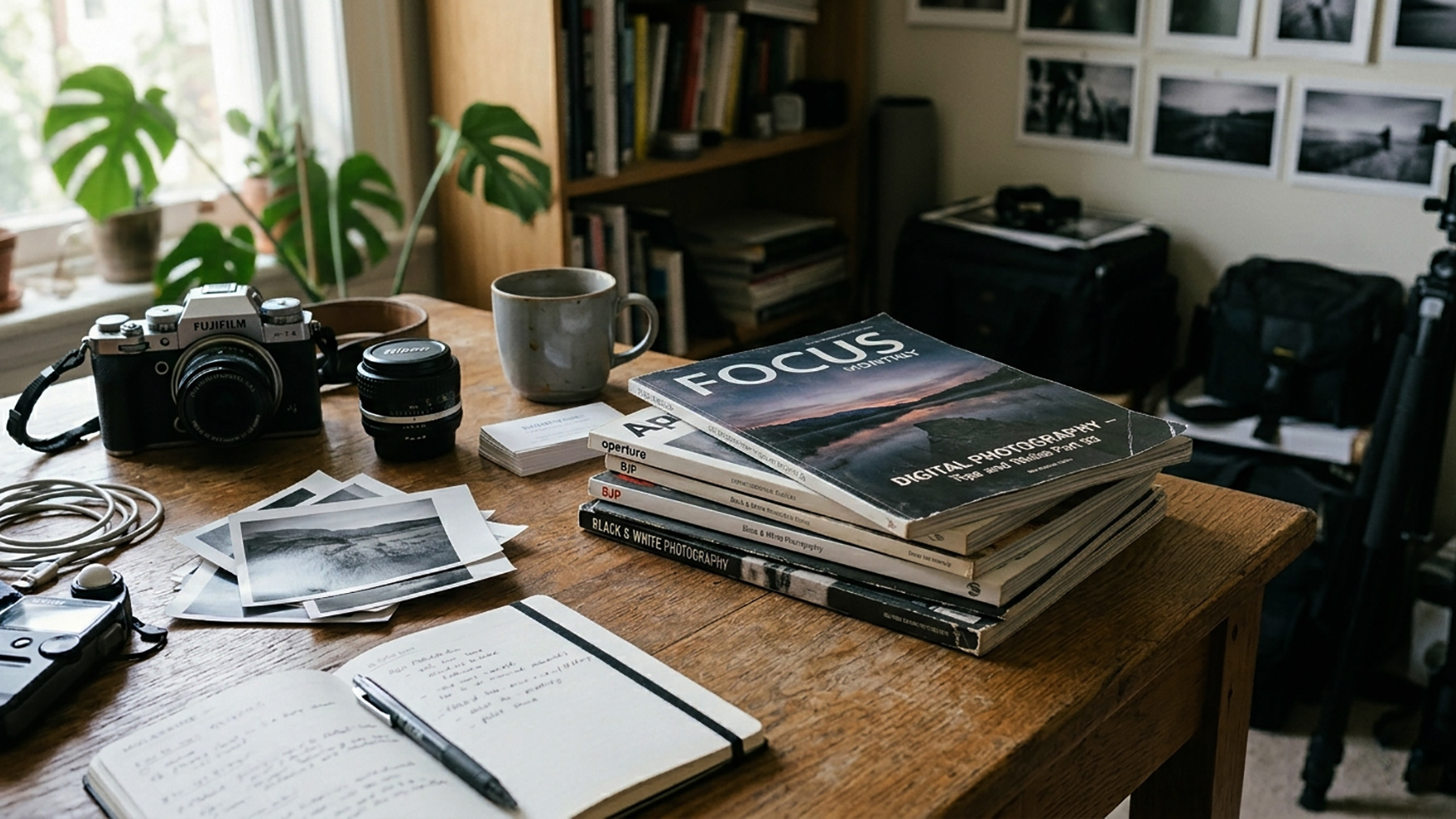
Looking down at the documents laid out on the worn wooden table, talking to my own mind, I realise that contemplating in the silence of the room, the final conclusion settles clearly in the mind, stripped of all academic noise:. The glass or the instrument has no memory, no soul, and no moral code. It cannot think.
There’s nothing like a right camera or right lens.
There is only the discipline of where you hold yourself.