In the clamorous marketplace of modern instruction, a profound confusion has taken root, not merely of grammar, but of purpose. The question of "Master Classes" versus "Master’s classes" is not a linguistic squabble; it is the hinge upon which we can assess the state of creative education in the 21st century. It forces us to confront the difference between technical competence and visionary mastery.
The digital age, with its seductive promise of instantaneous knowledge, has given rise to the Commercial Master Class: the highly produced, subscription-based video courses featuring a celebrated name—be it in photography, cinema, acting, or writing. These are the "ready-to-eat packets," offering a polished, À la carte selection of tips, tricks, and workflows. They provide an exclusive, backstage pass to a successful individual’s "HOW"—-how Anthony Hopkins memorizes a script, how a chef plates a dish, or how Sven Nykvist achieved a specific lighting effect. Subscribers add water and heat, hoping to replicate the aesthetic outcome, often without grappling with the fundamental principles that underpin it.
This model, creates clones. It emphasizes imitation over innovation, delivering high-level technique at the expense of developing a personal, critical vision. The root thought, the indispensable "WHY"—- why Avedon chose that moment of vulnerability, or why Ingmar Bergman framed a scene with such minimalist dread—is drained into a simplified "HOW."
Contrast this with the trajectory of the true masters. When we look back at figures like Oscar Wilde, Bergman, or the young artists honing their craft, they did not have access to pre-formatted instructional videos. They achieved mastery through institutional teaching and protracted, clean-slate observation—the very model suggested by the term "Master’s classes" in the context of advanced, graduate-level academic training.
These Master’s classes, whether in a formal university setting, a conservatory, or a rigorous apprenticeship, demand years of critical dialogue, theoretical grounding, and sustained, messy failure. This environment acknowledges that the variables are an infinite lot, and therefore, the student must learn to solve problems from first principles, rather than simply applying a formula. The institution provides the historical and philosophical context that forces the student to observe without prejudice, to develop a personal, intellectual framework, and only then to embark on the formatting that later becomes their master’s theoretical thought and execution.
Can anyone hone their vision with the commercial Master Classes? The answer is a qualified no. While they can provide necessary technical illumination—a shortcut around months of fumbling—they cannot replicate the metabolic process of true education. They fail to subject the student to the rigorous, multi-faceted critique and profound self-doubt required to forge a unique voice.
The 21st century has indeed produced masters, but their mastery is a consequence of continuous, deep practice, and often, a self-guided journey of critical thought, not a video subscription. The "need of the hour" is not the quick-fix competency offered by an online/offline master, but a return to the depth, rigor, and philosophical inquiry that defines genuine Master’s-level instruction. Only by engaging with the "WHY" can a student move beyond competence and begin the arduous, yet rewarding, path to true mastery.
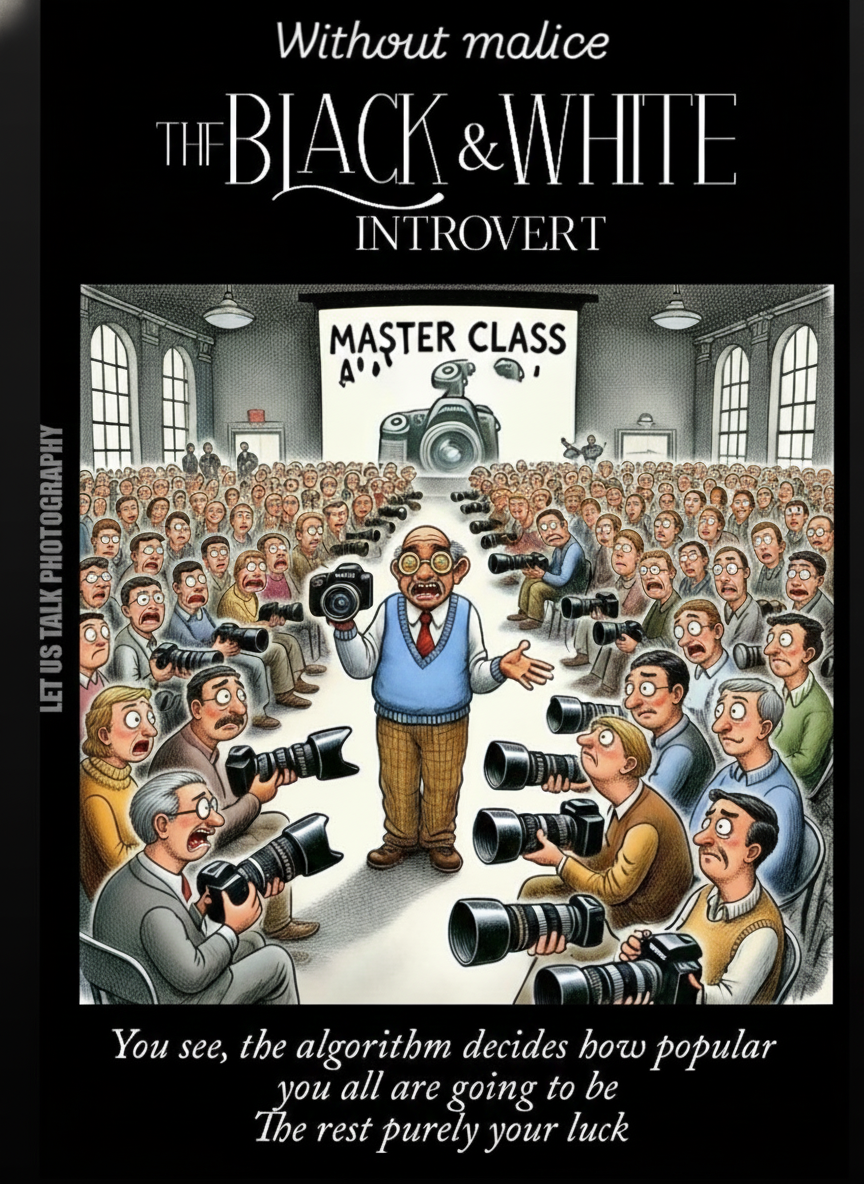
The proliferation of the Commercial Master Class presents a fundamental challenge to the traditional pursuit of excellence. This model thrives entirely on the efficiency and star power of the 'Master on Duty' . The most stinging flaw of the commercial Master Class lies in its lack of evaluation. Once the show is over, the student’s application of the lessons is not subjected to peer review, professorial grading, or an exit thesis. The success of the resulting work is instead left to the capricious judgment of the public and, critically, the algorithm..
This is where the danger becomes acute: we see the proliferation of Master 1, Master 2, Master 3 junior versions—creators who are technically polished, capable of producing competent, aesthetically pleasing work, but who lack an original voice. Their success is often measured not by enduring artistic merit, but by engagement rates, view counts, and likes. The algorithm validates the clone, prioritizing the easily digestible and repeatable formula over the challenging, complex, and revolutionary vision. The contemporary Master Classes provide the tools of competence; only the strenuous, un-packaged journey of intellectual and creative self-discovery—the kind necessitated by true institutional or rigorous self-directed training—can yield genuine mastery.